Stop Guessing. Start Finding Answers.
RulesBuddy helps leaders, officers, parliamentarians, and members confidently navigate bylaws, disciplinary actions, parliamentary procedure, and governance challenges.
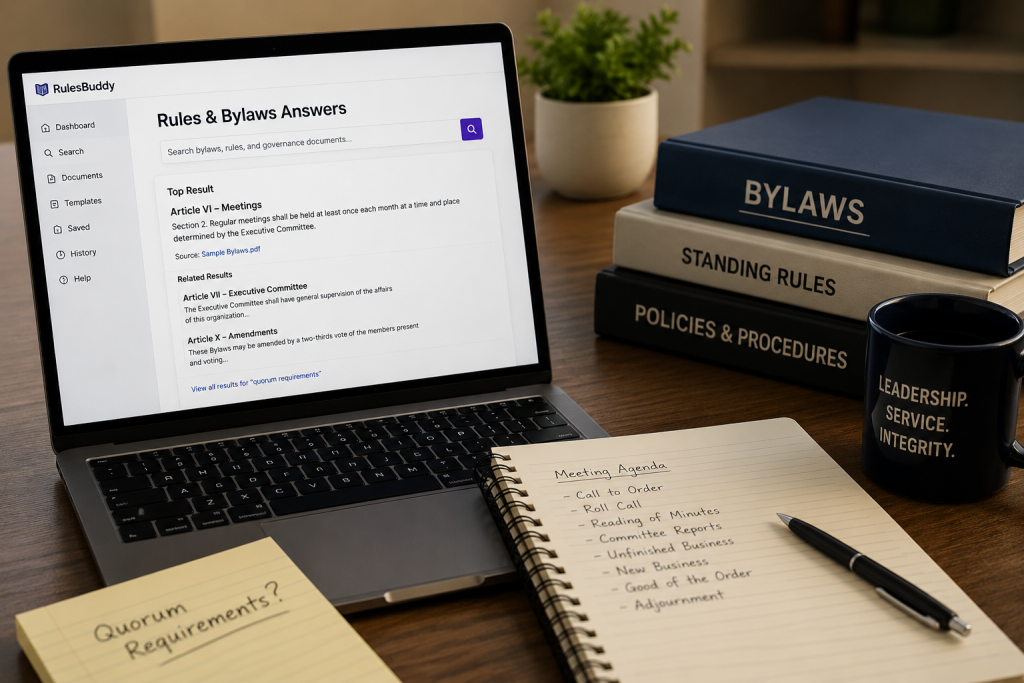
Rules & Bylaws Answers
Search governing documents, bylaws, and procedural resources to find the answers you need without hours of research.
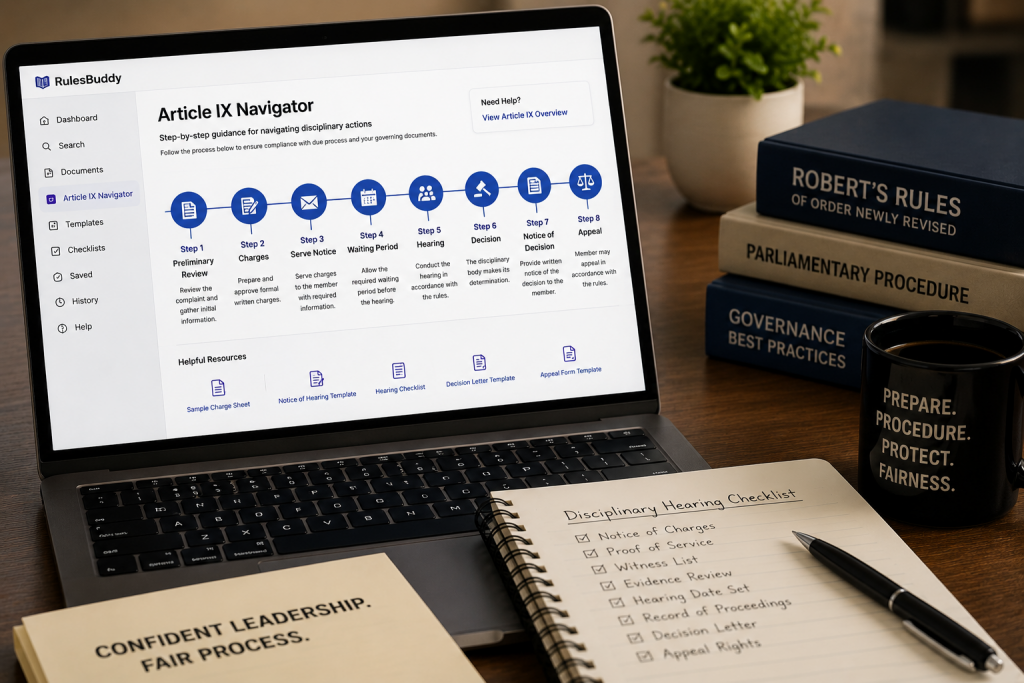
Article IX Navigator
Navigate disciplinary procedures, notices, hearings, appeals, and due process requirements with step-by-step guidance.
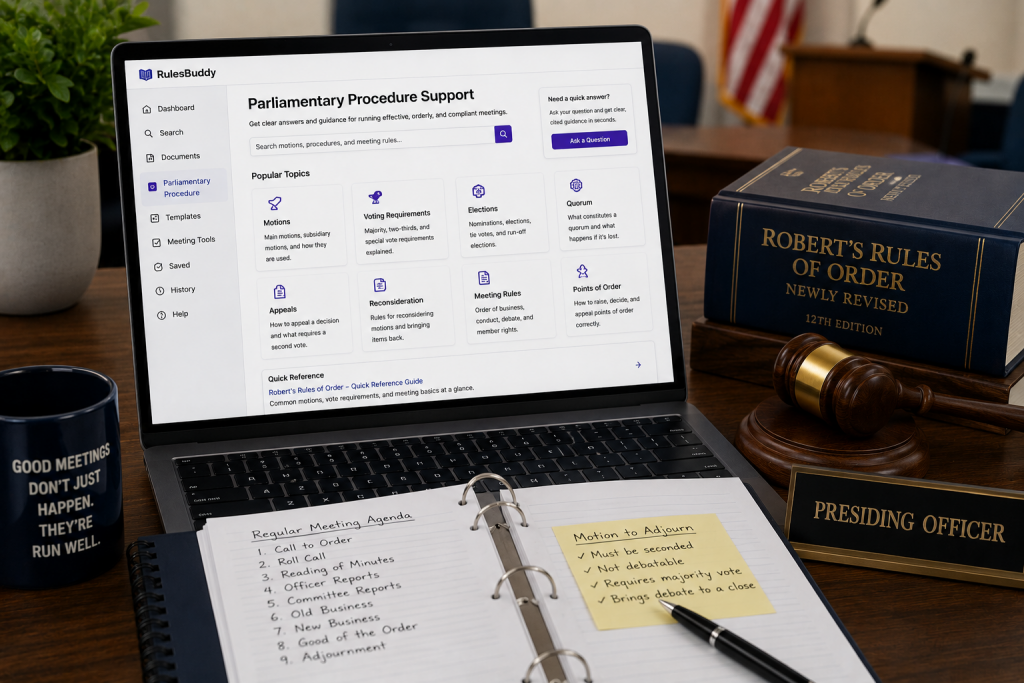
Parliamentary Procedure Support
Understand motions, voting requirements, elections, quorums, appeals, and meeting procedures with confidence.
Built by a member, for members. RulesBuddy was created after years of helping organizations navigate bylaws, parliamentary procedure, governance challenges, and disciplinary matters. Now those resources are available whenever you need them.
Choose Your RulesBuddy Membership
Get answers to bylaws, parliamentary procedure, governance, and Article IX questions with the membership level that fits your needs.

Officer Pro Membership
$7.81/ month or $84.52/ year
Designed for officers, members, secretaries, parliamentarians, and organizational leaders who need reliable access to governance and procedural resources.

Rules & Bylaws Library
Search rules, bylaws, and governing documents.
Parliamentary Procedure Guidance
Get help with motions, voting requirements, and meeting procedures.
Governance Resources
Access practical tools, checklists, and leadership resources.
Expert Membership
$12.39/ month or $133.79/ year
Built for leaders handling complex governance, disciplinary matters, and organizational compliance issues.
Everything in Officer Pro
Full access to all Officer Pro resources.
Article IX Navigator
Step-by-step guidance through disciplinary procedures.
Advanced Templates & Tools
Notices, checklists, hearings, appeals, and governance documents.
Questions RulesBuddy Can Help Answer
What vote is required to amend bylaws?
Can a member appeal an Article IX decision?
What constitutes a quorum?
Can a board overturn a committee recommendation?
How should disciplinary charges be served?
Can a motion be reconsidered?
Who has authority to remove an officer?
What notice is required before a hearing?
Parliamentary Procedure is a crucial set of rules and guidelines designed to facilitate orderly and efficient meetings within organizations, legislative bodies, and various formal assemblies. It ensures that all participants have a fair opportunity to contribute, debate, and make decisions in a structured manner. Understanding Parliamentary Procedure is essential for anyone involved in governance, board meetings, or committee discussions, as it promotes transparency, fairness, and democratic decision-making.
At its core, Parliamentary Procedure provides a framework for conducting meetings by outlining how motions are made, debated, and voted upon. Commonly used rules stem from Robert’s Rules of Order, which is the most widely recognized guide for parliamentary practice. These rules help maintain decorum, prevent confusion, and ensure that meetings progress smoothly without unnecessary interruptions or conflicts.
Key elements of Parliamentary Procedure include the proper use of motions, such as main motions, subsidiary motions, privileged motions, and incidental motions. Each type of motion serves a specific purpose, from introducing new business to addressing procedural questions or emergencies. Understanding the hierarchy and precedence of these motions is vital for effective meeting management.
Additionally, Parliamentary Procedure emphasizes the importance of a chairperson or presiding officer who facilitates the meeting by recognizing speakers, enforcing rules, and guiding the decision-making process. The role of minutes or official records is also critical, as they document the proceedings and decisions made during the meeting.
Incorporating Parliamentary Procedure into your organization’s meetings enhances collaboration, minimizes misunderstandings, and ensures decisions are made democratically and efficiently. Whether you are a member of a nonprofit board, a corporate team, or a legislative committee, mastering Parliamentary Procedure equips you with the skills to lead and participate in productive and respectful discussions. Embracing these procedural rules ultimately strengthens governance and fosters a culture of order and respect in any formal assembly.